
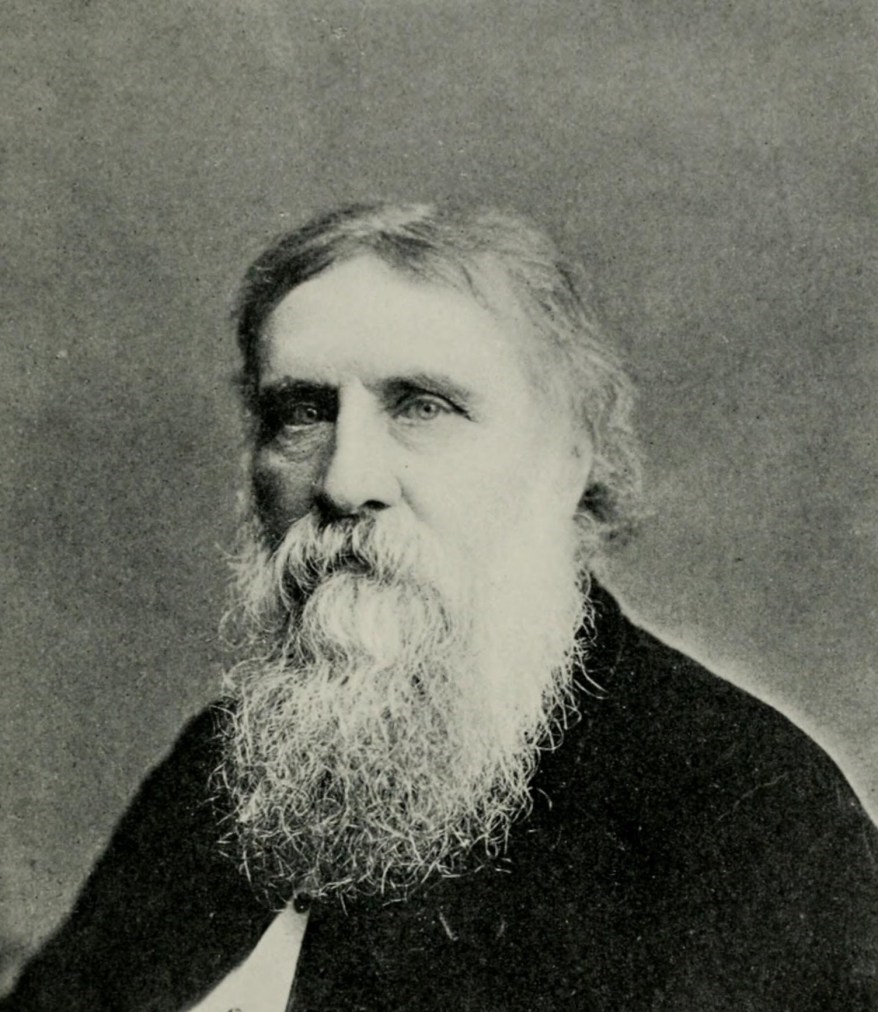
This newsletter engages with the work of George MacDonald as a springboard for ideas and reflections, with this question particularly in mind:
How does the condition of mind affect our life’s journey?
It is my experience that MacDonald’s writings are worth reading again and again. And I see his work containing a multitude of seeds. These seeds need to land in receptive, fertile soil in me, the reader; then to be watered and helped to grow. The articles here are the result of my ponderings, and trying to take the thought further. Material from MacDonald’s novels is used for the greater part, with occasional reference to his sermons and other works.
Short quotations from MacDonald are generally posted in the Notes section several times a week. And there is currently a Reading Project, with a chapter of MacDonald’s 1882 novel, Weighed and Wanting, sent out each week.
Our relationship with “Nature, the housekeeper” of the Father’s house, is one theme that comes up, for example in the article, Blown by an Unknown Wind, which takes a look at some of the many occurrences of MacDonald’s descriptions of wind in his writing, with his manifest or hinted use of symbolism of the spirit, particularly regarding the words, “The wind bloweth where it listeth.” [John 3:8, KJV.]
Also taking Nature, and how we are helped by her, The Pleasure of Struggle looks at the joyfulness of some of MacDonald’s characters in struggling with her sterner aspects, and how in so doing they can feel reality to be more real. The Force of Nature in Illness considers the action of Nature in our own bodies and minds in illness, which is sometimes brought to our attention by MacDonald for its teaching and purifying power.
Feelings and Foretastes, drawing on a scene in MacDonald’s 1875 novel, Malcolm, is about developing a sensitivity to Nature by letting go of the obstructing veil of automatic perception, or ordinariness.
The phrase “condition of mind,” that MacDonald uses now and again, is looked at in some of his contexts, in the articles, Generation and Receptivity of Thought, along with Its Own Nest - The Invisibility Of The Ready Heart and Humility and Humiliation. We see that by “condition of mind,” he seems to include the feelings as well as the intellect, and also that the phrase has a lot in common with others he uses sometimes, namely, “spiritual condition” and “condition of humanity.”
In A Coasting Voyage, an imaginative view is taken of the characters of Malcolm and the marquis in the book Malcolm, as giving some insights into the inner terrain of each of us, and in listening to the voice of conscience.
There are further articles with reflections on aspects of Malcolm. In A Soft Light Air, we see MacDonald’s approach to the question that “the mad Laird” in Malcolm is tortured with: “Whaur come ye frae?” and which is a question for us all to meditate upon. As well as the wisdom of a child, again Nature and wind, and now also stillness, come to help the form of thought and feeling in the atmospheric response.
In The Hero of One’s Own Book, I inquire about the best way to read MacDonald, and wonder about how he may help the reader write their own living book, as it were. Can I become a “Malcolm” for my own life?
There is the harbouring of opposites in the character of Duncan MacPhail in Malcolm, examined in the article Blindness and Vision. The terrible theme of revenge along with its opposite of hospitality are explored, the latter being so prominent with MacDonald and his family. The horror of the massacre of Glencoe, although occurring in 1692, about 130 years before the time in which the story of Malcolm was set, which has such importance as a thread woven right through Malcolm and The Marquis of Lossie, and is part of MacDonald’s own family history, is brought to the reader in vivid detail not only with the frequent reference by Duncan, but also with the echo of metaphor in the dramatic fictional story. The pictures and characters, moreover, are again reflected as if I am looking in a mirror to teach me about myself.
Further thoughts on the principle of hospitality from a number of different angles, both outer and inner, are then pursued in They Gave Them With Welcome. The question is asked, how can the poor be more hospitable than the rich, in MacDonald’s view?
Weaving a History, explores how to make something of one’s life, using the described writing process in and by The Vicar’s Daughter as an analogy for the idea (again) of writing the book of one’s life, using every seeming chance event as material. MacDonald’s insights on the relationship between knowing what one must do, the strength to act, and doing something, even if mistaken, are brought very much to the fore here.
“To Develope the Common-Sense” takes the theme of learning and teaching in David Elginbrod, and MacDonald’s definition of common sense as the “faculty of judging of things by their nature,” and asks whether in developing this we can reach a new kind of perception and thinking. This idea is continued in The Hidden Workshop of the Soul, where we find ourselves in the region of music, far below the thinking-place, described so vividly in Mary Marston, which I suggest could be linked with what MacDonald calls, “heavenly common sense,” in the voice of Maister Graham, in The Marquis of Lossie.
Finally, there are Commentaries on aspects of Weighed and Wanting, which take elements for reflection from the chapters sent out for the Reading Project. So far, these have included the subjects of growth and descent, the potential value of dreariness, internal and external weather, learning to think, perception and memory, as well as, perhaps most importantly, what one cares about.